

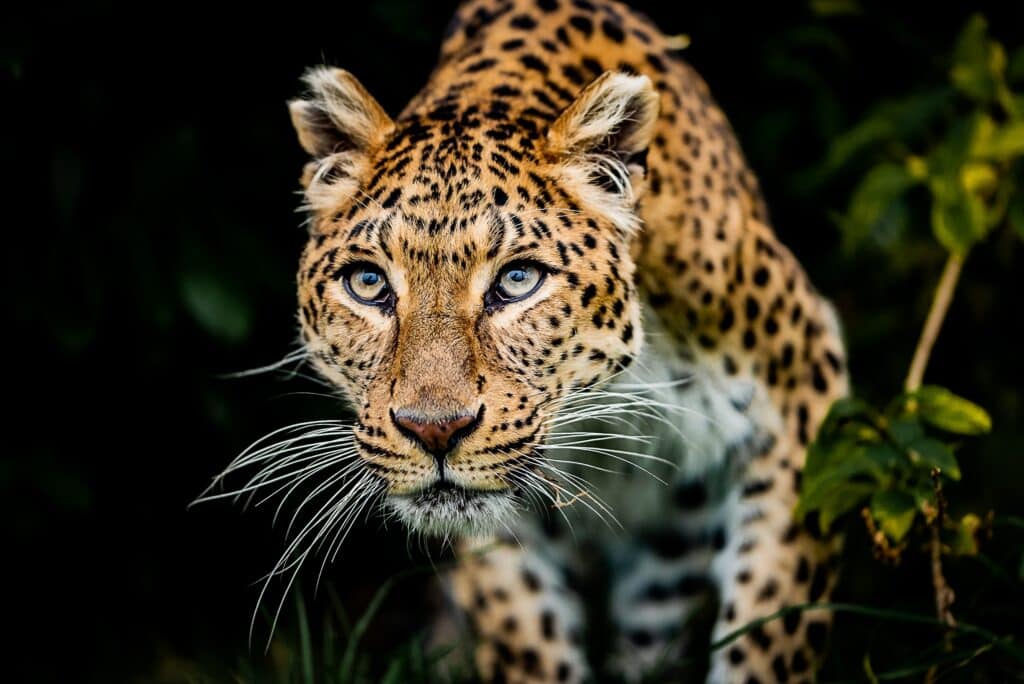
OUR NOCTURNAL KUBE YINI VISITOR
The Leopard
Kube Yini
The African leopard (Panthera pardus pardus) is a stunning and adaptable big cat that inhabits a wide range of environments across sub-Saharan Africa. Known for its remarkable versatility and elusive nature, the African leopard plays a crucial role in maintaining the ecological balance within its diverse habitats, which include savannas, forests, mountains, and deserts.
Leopards are medium-sized felines, with males typically weighing between 60 to 91 kg and females ranging from 28 to 60 kg. Their body length can extend from 1.6 to 2.3 meters, including a tail that accounts for roughly one-third of their length. The leopard’s coat is characterized by a golden-yellow background adorned with black rosettes and spots, providing excellent camouflage in the dappled light of their natural environment. This camouflage, combined with their stealthy behavior, makes leopards incredibly effective hunters.
Leopards have a highly varied diet, showcasing their adaptability. They are opportunistic feeders and their prey includes a wide array of animals such as antelopes, deer, primates, birds, and even insects. One of their distinctive hunting strategies is their ability to carry prey up trees. This behavior not only keeps their catch safe from scavengers like hyenas and lions but also demonstrates their immense strength; leopards can hoist carcasses weighing up to three times their own body weight into the branches.
African leopards are solitary and territorial animals. They mark their territories with urine, feces, and claw marks on trees. These territories can vary greatly in size, ranging from 30 to 78 square kilometers for males and about half that size for females. The size of a leopard’s territory often depends on the availability of prey and the density of the leopard population in the area.
Reproduction in leopards occurs year-round, with a peak in births during the rainy season when prey is more abundant. After a gestation period of approximately 90 to 105 days, a female gives birth to a litter of 2 to 4 cubs. Leopard cubs are born blind and rely entirely on their mother for the first few months of life. They begin to open their eyes after about 10 days and are weaned at around 3 months. However, they remain with their mother for up to two years, learning essential survival skills before venturing out on their own.
Leopard populations are currently under threat from habitat loss, human-wildlife conflict, and poaching. Habitat fragmentation due to agricultural expansion and urban development is a significant concern, as it reduces the availability of prey and suitable living spaces. In some regions, leopards are hunted for their beautiful pelts and for traditional medicine. Moreover, retaliatory killings by farmers protecting livestock further exacerbate the decline in leopard numbers.
Conservation efforts are vital to protect African leopards and their habitats. Initiatives such as protected areas, anti-poaching measures, and community-based conservation programs aim to mitigate these threats. Organizations are also working to promote coexistence between leopards and human populations through education and compensation schemes for livestock losses.
Despite these challenges, the African leopard remains a symbol of grace and power, representing the rich biodiversity of the African continent. Its ability to adapt to various environments and its role as a top predator make it an essential species for maintaining the health of ecosystems. By continuing to support conservation efforts, we can ensure that future generations will have the opportunity to witness the beauty and majesty of the African leopard in the wild.
In summary, the African leopard is a testament to the resilience and adaptability of wildlife. With ongoing conservation efforts and a commitment to preserving natural habitats, we can help secure a future for these magnificent cats and the diverse ecosystems they inhabit.
